
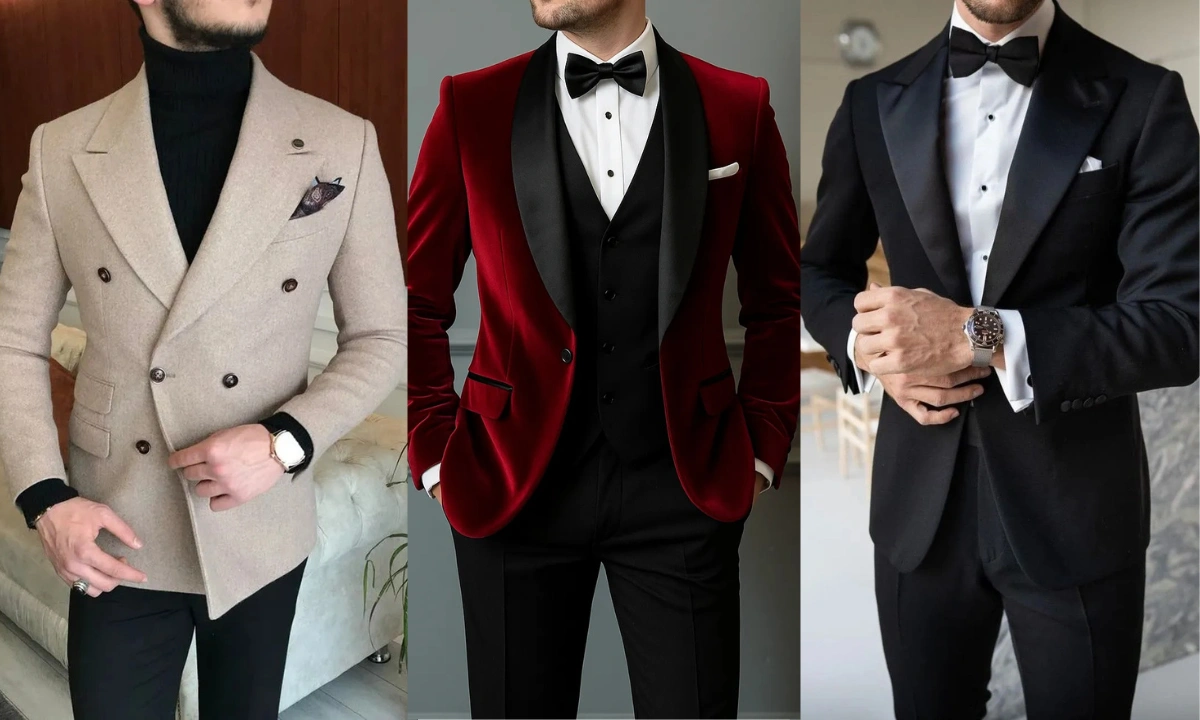
Types of blazers for men include single-breasted, double-breasted, sports, tuxedo, linen, velvet, and unstructured blazers—each designed for different occasions, seasons, and style preferences.
But here’s the thing: most men own maybe one blazer, usually inherited from a job interview circa 2015, and wonder why they never feel quite “put together.” The truth? That single navy blazer gathering dust in your closet can’t possibly cover first dates, beach weddings, client presentations, and Saturday brunch with equal finesse. Understanding the different types of blazers for men isn’t about becoming a fashion snob—it’s about having the right tool for the job, whether that job is charming your in-laws or closing a deal.
I learned this the hard way at a summer wedding in Charleston when I showed up in a wool blazer while everyone else floated by in breathable linen. Lesson learned: context is everything.
Blazer Statistics: The Numbers Behind Men’s Style Choices
| Statistic | Data | Source Context |
|---|---|---|
| Global blazer market value (2024) | $3.2 billion | Fashion industry reports |
| Percentage of men owning at least one blazer | 68% | Menswear consumer surveys |
| Most owned blazer color | Navy blue (41%) | Retail sales data |
| Average number of blazers owned by style-conscious men | 3-4 blazers | Fashion consultant observations |
| Growth in casual blazer sales (2020-2024) | 23% increase | E-commerce analytics |
| Wedding-related blazer purchases | 34% of all blazer sales | Occasion-wear market research |
| Preference for single-breasted vs double-breasted | 72% vs 28% | Consumer preference studies |
These numbers reveal something fascinating: while more men than ever recognize the importance of blazers, most still limit themselves to safe, generic options. Understanding types of blazers for men opens doors to versatility that transforms your wardrobe from functional to phenomenal.
1. Classic Single-Breasted Blazer
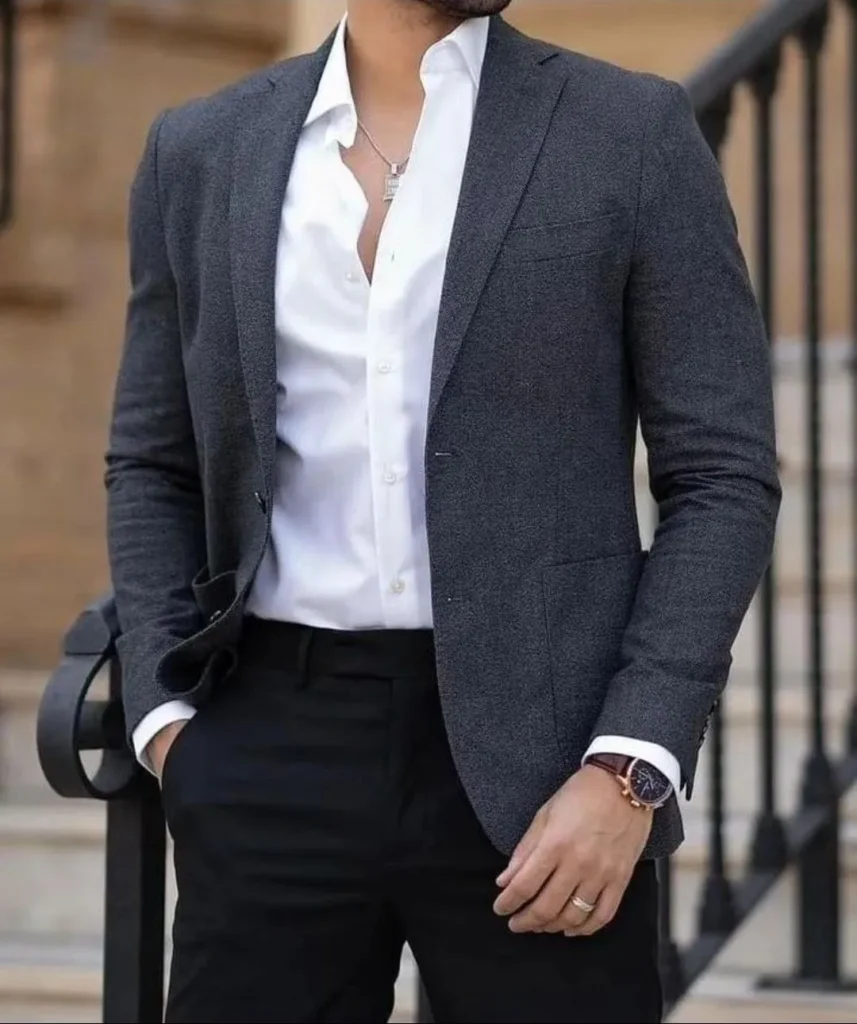
Let’s start with the workhorse, the reliable friend, the blazer equivalent of a Swiss Army knife. The classic single-breasted blazer features a single row of buttons (typically two or three) and notch lapels that create clean, vertical lines down your torso. This is the blazer your grandfather wore to Sunday dinners, the one James Dean made effortlessly cool, and the one you absolutely cannot mess up.
What makes the single-breasted design so universally beloved? Simplicity meets versatility. The streamlined silhouette works with everything from crisp dress shirts and ties for formal types of blazers for men occasions to plain white tees for weekend coffee runs. I’ve styled executives who wear their navy single-breasted blazers five days a week—changing only the shirt and trouser combinations—and they never look repetitive because the foundation is timeless.
Key features of single-breasted blazers:
- Button configuration: Two-button is most modern and flattering for most body types; three-button offers a slightly more traditional, preppy aesthetic
- Lapel style: Notch lapels are standard, creating a V-shape that elongates your frame
- Versatility rating: 10/10—works for business meetings, first dates, family gatherings, and semi-formal events
- Fabric options: Wool for year-round wear, cotton for spring/summer, wool blends for durability
- Color recommendations: Navy and charcoal gray are non-negotiables; consider burgundy or forest green as your third
The single-breasted blazer thrives in professional environments where you need to look polished without intimidating. It’s approachable yet authoritative. Pro tip from my Savile Row sources: always button only the top button when standing (never the bottom), and unbutton completely when sitting to prevent fabric stress and maintain a clean line.
2. Double-Breasted Blazer for a Bold Statement
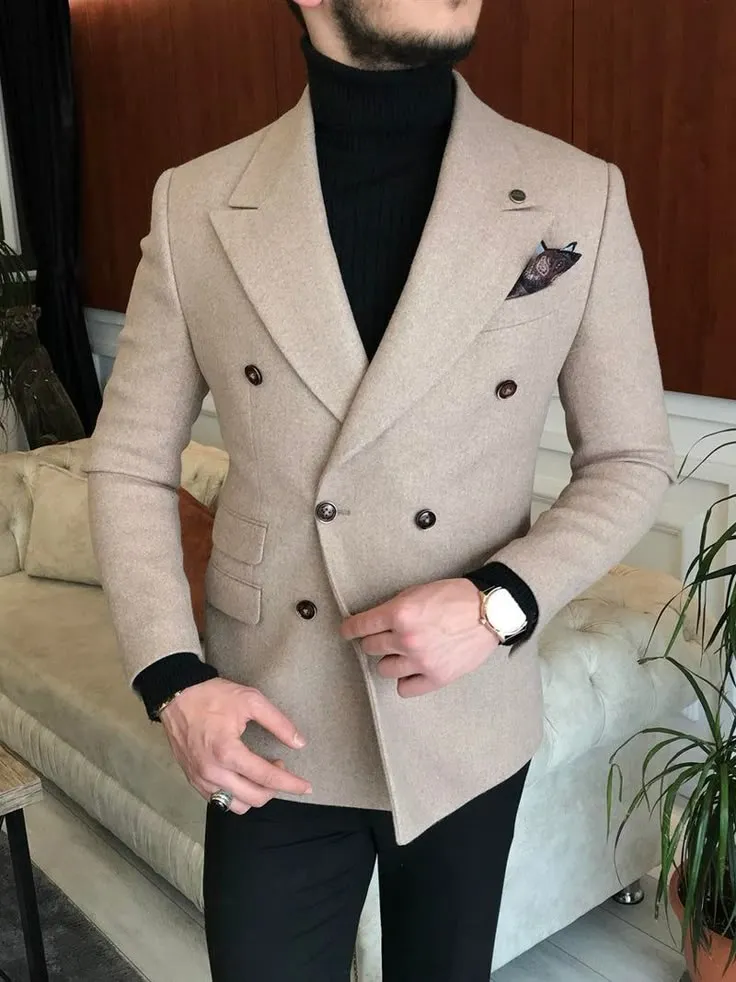
Now we’re talking power moves. The double-breasted blazer announces your arrival before you even speak. With two parallel columns of buttons (usually six total, though four and eight-button versions exist) and peaked or notched lapels that sweep dramatically across your chest, this style carries serious gravitas. Think Don Draper delivering the Carousel pitch, or Daniel Craig’s James Bond sizing up villains at Monte Carlo.
I once styled a tech startup CEO for a major investor presentation. He’d been wearing hoodies for years but needed to command respect in a room full of Wall Street veterans. We went with a charcoal double-breasted blazer with peak lapels, and the transformation was immediate—suddenly he looked like someone you wanted to write checks to. That’s the psychological impact of a well-fitted double-breasted design.
What makes double-breasted blazers distinctive:
- Visual weight: The overlapping fabric panels create width across the chest and shoulders, making them ideal for slim or athletic builds seeking more presence
- Formality level: Inherently dressier than single-breasted options; less common in casual settings but increasingly versatile
- Button discipline: You can button just the bottom left button or both left buttons when standing; never unbutton a double-breasted blazer while wearing it (unlike single-breasted styles)
- Lapel statement: Peak lapels point upward, creating an aggressive, confident silhouette; notch lapels on double-breasted designs offer slightly softer formality
When considering types of blazers for men with name recognition and historical prestige, the double-breasted ranks supreme. Originally popularized by British naval uniforms, it became civilian styling royalty in the 1930s and experienced revivals in the 1980s (with excessive shoulder padding) and today (with sleeker, modern proportions). The contemporary double-breasted blazer features a trimmer fit than vintage versions, eliminating the boxy corporate warrior aesthetic.
Important note for first-time buyers: double-breasted blazers are unforgiving with fit. Too tight and you’ll look like a sausage in fancy wrapping; too loose and you’ll resemble a child playing dress-up in dad’s closet. Invest in proper tailoring—the back should hug your shoulder blades, and the button stance should align with your natural waist.
3. Sports Blazer for a Laid-Back Look
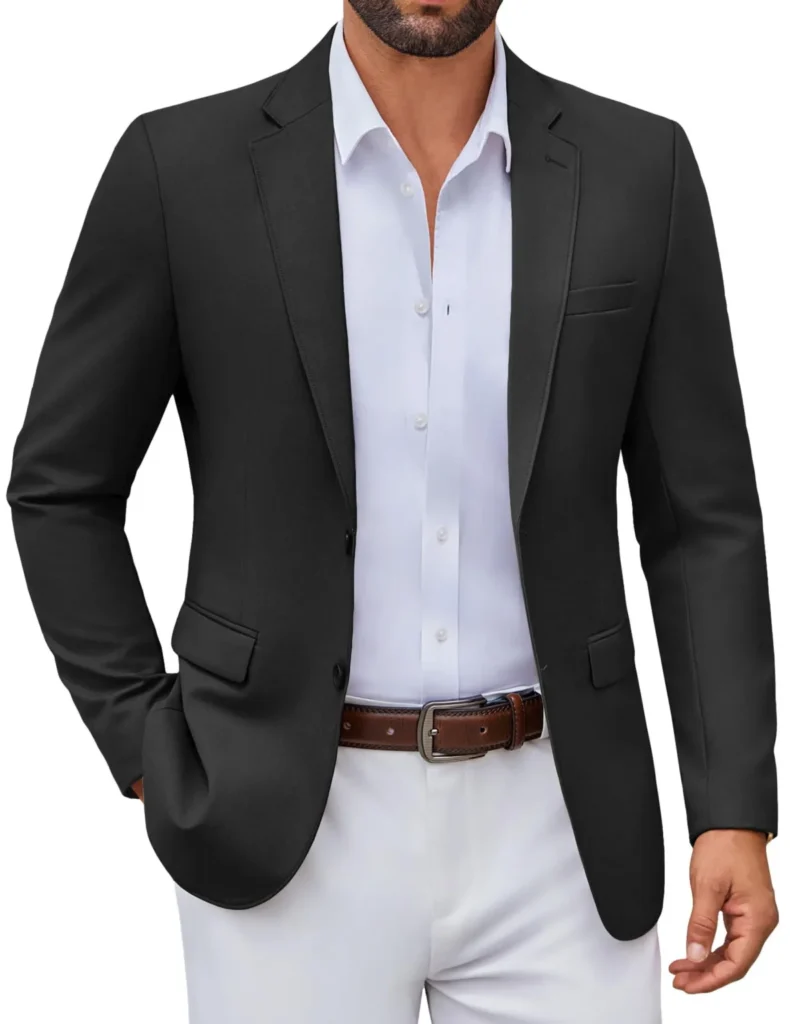
Here’s where things get fun. The sports blazer—not to be confused with athletic wear—originated in 19th-century England when gentlemen needed something less formal than their riding coats but more substantial than shirt sleeves for, well, sporting activities. Today, it’s the bridge between casual and dressy, the blazer you wear when “business casual” means different things to different people.
Sports blazers distinguish themselves through texture, pattern, and a slightly more relaxed construction. You’ll find them in tweeds, herringbones, windowpane checks, and bold plaids that would look ridiculous on a traditional suit jacket but somehow work perfectly when paired with dark jeans or chinos. I have a rust-colored herringbone sports blazer that’s survived ten years of autumn weekends, brewery tours, and outdoor concerts—it’s basically indestructible and gets better with age.
Sports blazer characteristics:
- Fabric personality: Heavier, textured materials like tweed, corduroy, hopsack weave, and cotton-linen blends
- Pattern freedom: Unlike conservative business blazers, sports coats embrace bold checks, university stripes, glen plaids, and even subtle florals
- Patch pockets: Many feature patch pockets (sewn onto the outside) rather than flap or besom pockets, creating a casual, approachable vibe
- Elbow patches: Some traditional styles include leather or suede elbow patches—originally functional for durability, now purely aesthetic and slightly professorial
The sports blazer represents casual types of blazers for men at their finest. Pair yours with dark denim, brown leather boots, and a crisp white Oxford shirt for weekend sophistication. Or dress it down further with a Breton-striped tee and canvas sneakers for relaxed coffee shop vibes. The beauty lies in its adaptability—you can take it from Saturday farmer’s market to evening cocktails with a simple swap of footwear and accessories.
One caveat: sports blazers can read “costume-y” if you go too British country estate on the pattern and texture. Unless you’re actually at a Scottish hunting lodge, maybe avoid the full Highland tweed with leather accents. Moderation keeps you stylish rather than themed.
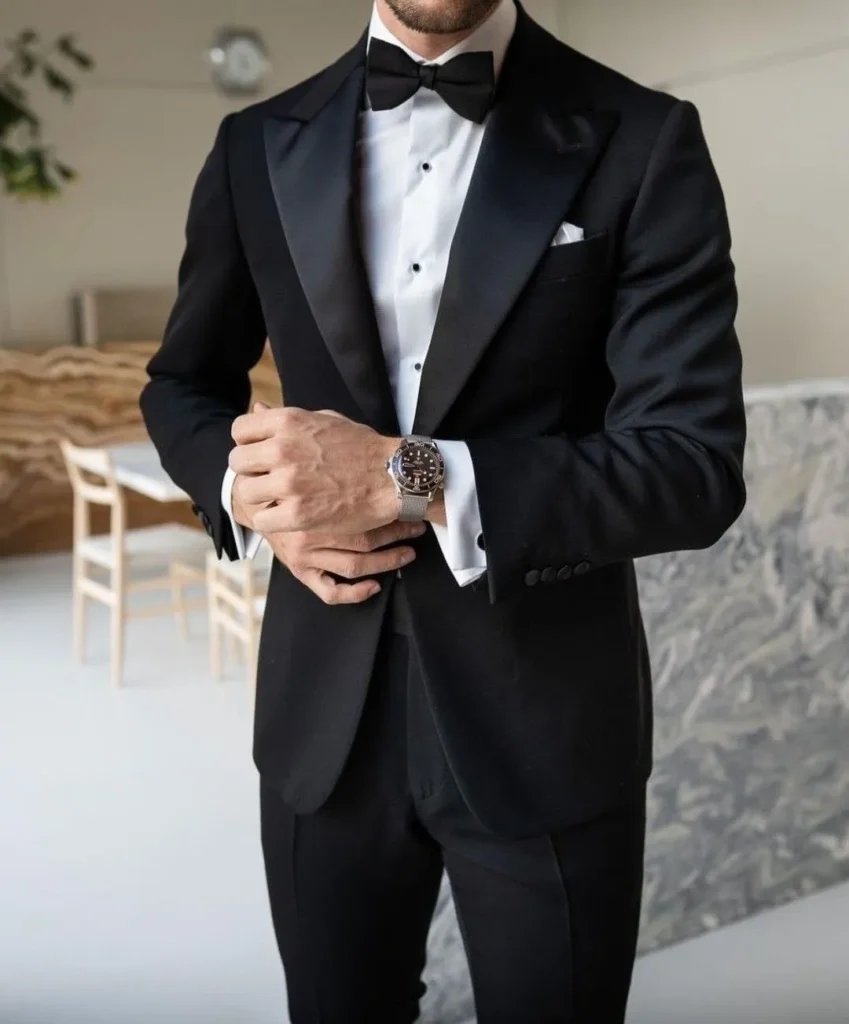
4. Tuxedo Blazer for Formal and Wedding Occasions
Welcome to black-tie territory, where the rules tighten up and the details matter exponentially. The tuxedo blazer (or dinner jacket, if you’re feeling fancy) represents the pinnacle of formal types of blazers for men and wedding types of blazers for men wardrobes. Distinguished by satin or grosgrain silk lapels, matching stripe down the trouser legs, and an expectation of bow ties, tuxedo blazers signal serious celebration.
But here’s what most men miss: not all tuxedo blazers follow the same formula. Traditional tuxedos feature a single-button, shawl-collar design in midnight blue or black. However, modern interpretations include double-breasted tuxedo jackets with peak lapels (extra commanding), velvet dinner jackets in burgundy or forest green (holiday party gold), and even white dinner jackets for tropical or summer formal events (think James Bond in the Caribbean).
I’ll never forget styling a groom who insisted tuxedos were “all the same” until we did a proper fitting. When he saw himself in a perfectly tailored midnight blue tuxedo with peak lapels and a proper dinner shirt, his exact words were, “Oh. OH. This is what it’s supposed to look like.” That’s the magic—when done right, a tuxedo blazer doesn’t feel like a costume or rental; it feels like armor.
Essential tuxedo blazer elements:
- Lapel facing: Satin or grosgrain silk in matching (most formal) or contrasting (more modern) tones to the jacket body
- Lapel styles: Shawl collar (rounded, elegant), peak lapel (aggressive, bold), or notch lapel (less common, more contemporary)
- Button covering: Buttons on tuxedo jackets are typically covered in the same silk as the lapels
- Pocket format: Besom pockets (welted without flaps) or jetted pockets maintain the sleek formality
- Trouser coordination: Must be worn with trousers featuring satin side stripes matching the lapel silk
When events specify “black-tie,” the tuxedo blazer is non-negotiable. When they say “black-tie optional,” you have permission to wear a very dark suit instead, but honestly? A man in a proper tuxedo at a black-tie optional event will always outshine someone in a suit. It’s physics. Or maybe confidence. Either way, if you’re asking yourself how many types of blazers are there for men and whether you need a tuxedo blazer, the answer is yes—eventually, you absolutely will.
Pro tip: Rent versus buy depends on frequency. If you attend formal events fewer than twice yearly, renting makes financial sense. If you’re in the wedding circuit or your profession involves galas, invest in ownership and perfect tailoring. A $600 tuxedo you own beats a $150 rental every single time in fit, comfort, and confidence.
5. Linen Blazer for Summer Comfort
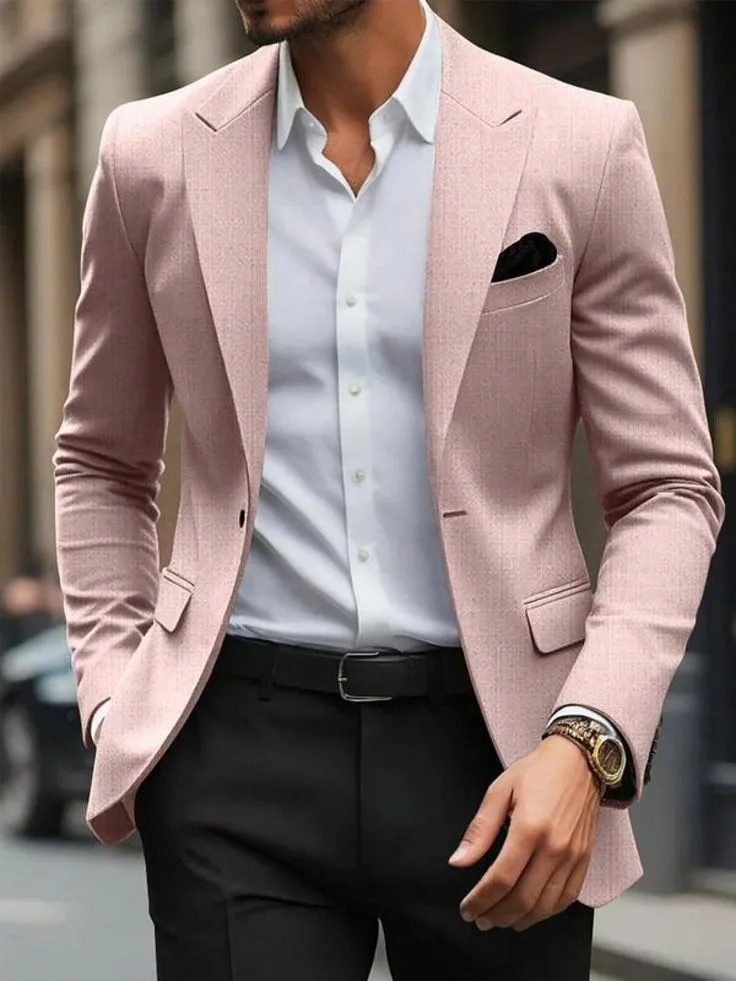
Let’s address the elephant in the room—or rather, the sweat-soaked businessman at the outdoor wedding. Traditional wool blazers, while beautiful, become torture devices when temperatures climb above 75°F. Enter the linen blazer: breathable, lightweight, and visually cool in both temperature and aesthetic. This is warm-weather sophistication without the suffering.
Linen blazers have a complicated reputation among men. Some view them as wrinkled disasters; others see them as Mediterranean summer incarnate. Both perspectives hold truth. Yes, linen wrinkles—aggressively and within minutes of putting it on. But here’s the secret: that’s not a bug; it’s a feature. Linen’s relaxed, lived-in texture communicates ease and confidence. You’re not trying too hard. You’re comfortable. You’re possibly at a Greek island wedding or a Charleston garden party, and you look exactly right for the setting.
Linen blazer considerations:
- Wrinkle acceptance: Quality linen blazers develop what’s called a “refined crumple”—structured wrinkles that look intentional rather than sloppy
- Weight matters: Heavyweight linens (250+ grams per square meter) provide better structure; lightweight linens offer maximum breathability but can look too informal
- Lining decisions: Fully lined linen defeats the purpose; look for half-lined or unlined options for optimal airflow
- Color palette: Natural beiges, stone grays, soft blues, and crisp whites dominate; darker linens exist but negate some cooling benefits
- Occasion guidelines: Perfect for summer weddings, beach ceremonies, outdoor receptions, vacation dinners, and warm-climate business casual
My personal linen blazer war stories include wearing an unlined natural-tan version to a Napa Valley vineyard wedding where the ceremony hit 92°F. While other guests literally removed their jackets in defeat, the linen breathability kept me comfortable enough to keep mine on. That visual alone—everyone else jacketless and casual while I maintained structure—made me look like the most put-together guest by default. Sometimes winning is just about choosing the right fabric.
One critical note: linen blazers lean casual types of blazers for men by nature. The texture and wrinkle factor make them inappropriate for conservative business environments or winter formal events. They thrive in relaxed, warm-weather contexts where their natural properties become advantages rather than liabilities.
6. Velvet Blazer for Party Nights
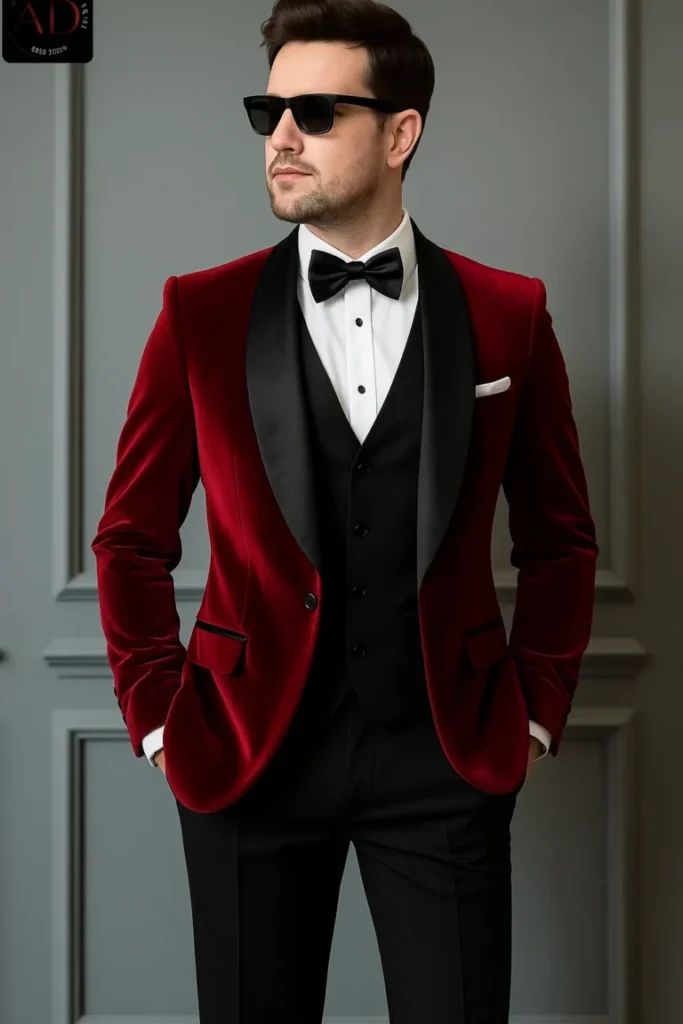
Now we enter statement territory. The velvet blazer is not subtle. It is not safe. It is not what your accountant wears to quarterly reviews. A velvet blazer announces that you have opinions about aperitifs, you probably know the DJ personally, and you’re absolutely comfortable being the most interesting-looking person in the room. This is your holiday party weapon, your New Year’s Eve closer, your “yes, I am wearing a velvet blazer to this art gallery opening and I look fantastic” power move.
Velvet’s luxurious nap (the soft surface texture) catches light differently than matte fabrics, creating depth and visual interest that photographs beautifully. The fabric originated in nobility’s wardrobes centuries ago when only the wealthy could afford such labor-intensive textiles. Today, velvet blazers occupy the intersection of vintage elegance and contemporary swagger.
Velvet blazer style guidelines:
- Color boldness: While black and navy velvet blazers offer understated luxury, consider jewel tones—burgundy, emerald, sapphire, or plum—for maximum impact
- Seasonal appropriateness: Velvet’s weight and visual richness suit fall and winter; wearing velvet in July sends confused signals
- Formality spectrum: Can dress up or down depending on styling; velvet with a tuxedo shirt approaches formalwear, while velvet with a plain tee reads artistic casual
- Pattern caution: Velvet’s texture provides enough visual interest; patterned velvet risks overwhelming your frame
- Fit precision: Velvet shows every tailoring flaw; ensure impeccable shoulder fit and sleeve length
I’ve seen velvet blazers transform shy clients into conversation starters. Something about wearing an objectively luxurious fabric gives men permission to embody confidence they might otherwise suppress. One particularly memorable styling involved a deep green velvet blazer paired with black trousers and a black turtleneck for a December gallery opening. The client reported strangers approaching him all evening just to compliment the jacket—instant social lubricant.
When considering types of blazers for men for evening events, cocktail parties, holiday celebrations, or creative industry functions, velvet deserves serious consideration. Just remember: velvet commands attention. If you’re uncomfortable with people noticing you, save this one for when you’re ready to be noticed.
7. Unstructured Blazer for Everyday Casual Style
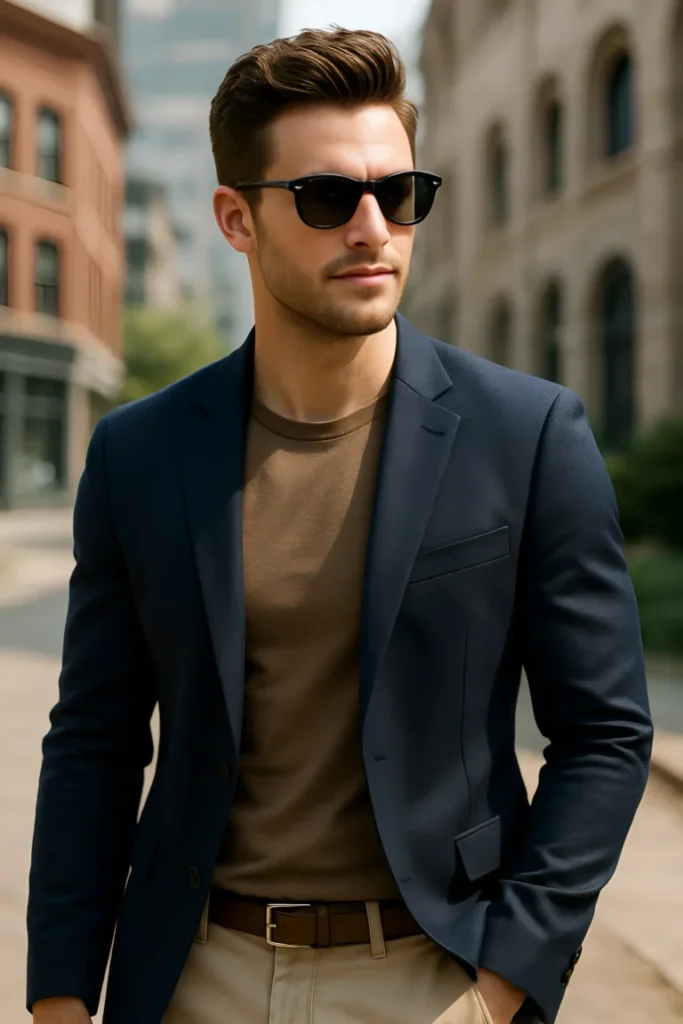
We’ve covered formal tuxedos and statement velvet—now let’s swing back to everyday wearability with the unstructured blazer, also called a soft-shoulder or unconstructed jacket. This is the blazer that doesn’t feel like a blazer. It’s lighter, more flexible, and infinitely more comfortable than its structured cousins. Think of it as the hoodie of blazers: casual enough for daily wear, polished enough to elevate your entire outfit.
Traditional blazers include substantial interior construction—chest canvas, shoulder padding, structured sleeves, and multiple inner layers that create shape and formality. Unstructured blazers strip most of that away, using minimal padding (sometimes none), lighter fabrics, and softer construction techniques. The result drapes naturally over your frame rather than sculpting it into an idealized form. Italian designers particularly excel at unstructured tailoring, creating blazers that move with you like knitwear rather than constraining you like armor.
The unstructured blazer represents peak casual types of blazers for men evolution. It bridges the gap between a proper blazer and a cardigan, offering just enough structure to look intentional while feeling relaxed enough for all-day comfort. I wear mine working from coffee shops, running errands, meeting friends for lunch, or traveling—anywhere I want to look assembled without feeling constricted.
Unstructured blazer advantages:
- Comfort supremacy: No shoulder padding means unrestricted arm movement; lighter construction prevents overheating
- Packability: Many unstructured blazers travel well, resisting creasing better than their structured counterparts
- Casual versatility: Pairs naturally with jeans, chinos, sneakers, loafers, t-shirts, henleys, and casual button-downs
- Fabric flexibility: Often made from cotton, linen-cotton blends, or lightweight wool that enhances the relaxed aesthetic
- Seasonal transition: Works across spring, summer, and fall with appropriate layering
Styling strategies for unstructured blazers:
- Pair with dark denim and white sneakers for elevated weekend casual
- Layer over a chambray shirt with chinos for relaxed business casual
- Combine with a textured tee and desert boots for creative professional settings
- Roll the sleeves (yes, blazer sleeves can roll) for extra casual energy
One important distinction: unstructured doesn’t mean sloppy or ill-fitting. Your blazer should still hit proper shoulder points, sleeve length, and body proportions. The difference lies in feel and drape, not sloppiness. I’ve encountered too many men who interpret “unstructured” as “doesn’t need tailoring”—wrong. Fit always matters; construction style is secondary.
Understanding Blazer Fundamentals: What Makes Each Type Unique
After exploring seven distinct types of blazers for men, let’s address the elements that actually differentiate these styles beyond surface aesthetics. Understanding these fundamentals helps you make informed decisions rather than impulse purchases based on mannequin styling.
Construction levels determine how structured or relaxed a blazer feels. Fully constructed blazers feature chest canvas (a layer of horsehair and wool that shapes the chest), shoulder padding, sleeve headers, and multiple inner layers. Half-constructed versions include some elements but reduce overall structure. Unstructured blazers minimize or eliminate these components. Each level serves different purposes: full construction for formal authority, half-construction for versatile professionalism, unconstructed for casual comfort.
Collar types of blazers for men significantly impact overall aesthetic. Notch lapels create clean, modern lines and work across formality levels. Peak lapels point upward aggressively, adding visual drama and formal presence—standard on double-breasted and tuxedo blazers. Shawl collars feature rounded, unbroken curves from neck to button, primarily appearing on tuxedo and smoking jackets for elegant evening wear. Less common variations include Mandarin collars (no lapel, stand collar only) for contemporary minimal styling.
Fabric weight and texture should match both season and occasion. Lightweight fabrics (6-9 oz wool, linen, cotton) suit spring and summer or indoor environments. Midweight options (10-13 oz wool, wool blends) work year-round in most climates. Heavyweight materials (14+ oz wool, tweed, corduroy) provide winter warmth and visual substance. Texture adds dimension—smooth fabrics read formal, textured fabrics read casual.
Fit philosophy has evolved dramatically over decades. The 1980s favored oversized, padded, boxy silhouettes. The early 2000s swung toward slim-fit and even “spray-on” skinny blazers that restricted movement. Today’s optimal fit balances structure with comfort: shoulders align with your natural shoulder points, chest allows two fingers of fabric to pinch at the button, length covers your rear, and sleeves show a half-inch of shirt cuff. Too tight suggests you’re squeezing into yesterday’s size; too loose suggests you borrowed your father’s jacket.
Making Smart Blazer Investments: Priority Order for Building Your Collection
If you’re starting from zero or one lonely blazer, which types of blazers for men deserve priority investment? Here’s the strategic build order based on versatility, occasion frequency, and cost-per-wear value:
First blazer: Navy single-breasted wool or wool-blend. This non-negotiable foundation works for 80% of situations requiring a blazer—business meetings, family events, first dates, funerals, semi-formal occasions, and smart-casual dinners. Invest properly here; this blazer will carry more responsibility than any other garment in your wardrobe.
Second blazer: Charcoal gray single-breasted. Provides variety while maintaining versatility. Gray reads slightly more formal than navy in some contexts, works beautifully with brown leather accessories, and offers winter-appropriate gravitas that navy sometimes lacks.
Third blazer: Unstructured casual in cotton or linen-cotton blend. Addresses the massive gap most men have: relaxed occasions that benefit from structure without formality. This fills weekend weddings, casual Fridays, travel, and social events where jeans meet Oxford shirts.
Fourth blazer: Sports blazer in textured fabric. Adds personality and seasonal appropriateness. Consider tweed or herringbone for fall/winter or hopsack weave for spring/summer. This separates you from the navy-and-gray masses.
Fifth blazer: Double-breasted or tuxedo depending on lifestyle. Career-focused men in leadership or client-facing roles benefit from double-breasted authority. Men in the wedding circuit or attending formal events need tuxedo functionality. Choose based on actual occasion frequency, not hypothetical “someday” events.
Specialty additions: Linen for warm climates or summer weddings, velvet for holiday parties and evening events, additional colors (burgundy, forest green, tan) once basics are covered. These enhance rather than establish your blazer wardrobe.
Common Blazer Mistakes That Undermine Style
Even with the right types of blazers for men in your closet, execution errors can sabotage your efforts. Here are the most frequent mistakes I encounter when styling clients:
Wearing orphaned suit jackets as blazers. That navy pinstripe jacket from your old suit is not a blazer—it’s half a suit crying for its missing trousers. Suit jackets feature matched fabric, patterns, and buttons designed for coordinated separates. True blazers use distinct fabrics and details that work independently. The visual difference is obvious to anyone paying attention.
Ignoring seasonal appropriateness. Wearing heavy tweed in July or lightweight linen in February confuses viewers and compromises comfort. Fabric weight should match climate—straightforward but frequently violated principle.
Buttoning incorrectly. Single-breasted: button only the top button when standing, never the bottom. Double-breasted: button the bottom left button minimum; both left buttons for fuller coverage. Always unbutton when sitting. These aren’t suggestions; they’re rules that affect how fabric drapes and ages.
Neglecting tailoring. An $800 blazer without alterations looks worse than a $200 blazer properly tailored to your frame. Shoulders, sleeve length, and body suppression must align with your proportions. Off-the-rack blazers fit maybe 10% of men perfectly; the rest of us need professional adjustments.
Over-accessorizing. A statement blazer (velvet, bold pattern, distinctive color) needs minimal accessories. A conservative blazer accommodates more personality in pocket squares, ties, and jewelry. Don’t compete with yourself for attention.
Forgetting the complete outfit. Blazers don’t float in isolation—trousers, shirts, shoes, and accessories must harmonize. A beautiful blazer with ill-fitting jeans and beat-up sneakers wastes the blazer’s potential. Think cohesive outfits, not individual pieces.
Conclusion
Mastering the types of blazers for men transforms how you navigate professional obligations, social events, and daily life. From the versatile single-breasted foundation to the statement-making velvet option, each style serves specific purposes that collectively cover every scenario requiring elevated appearance. The seven blazers detailed here—classic single-breasted, bold double-breasted, laid-back sports, formal tuxedo, summer linen, party-ready velvet, and everyday unstructured—represent comprehensive coverage across formality levels, seasons, and occasions.
Success lies not in owning all seven immediately but in strategically building your collection based on actual lifestyle needs. Prioritize versatile foundations before pursuing specialty pieces. Invest in proper tailoring regardless of purchase price. Choose fabrics appropriate to climate and season. Understand construction differences and their impact on comfort and appearance. Most importantly, wear your blazers regularly rather than saving them for hypothetical perfect occasions—confidence comes from familiarity, and familiarity comes from consistent wear.
The man who understands his blazer options navigates the world with quiet assurance, knowing he’s appropriately dressed for whatever situation unfolds. That preparation, that readiness, that effortless appropriateness—that’s real style. And it starts with knowing your types of blazers for men.
Frequently Asked Questions
Q1: How many blazers should a man own?
At least three: a navy formal blazer, a casual unstructured option, and one lifestyle-specific choice. Style-focused men may own 5–7, but three well-fitted, high-quality blazers are more valuable than a larger mediocre collection.
Q2: Can I wear a blazer with jeans?
Yes. Pair casual or unstructured blazers with dark, clean jeans for a smart-casual look. Avoid formal or heavily structured blazers, as mismatched formality levels can look awkward and unbalanced.
Q3: What’s the difference between a blazer and a sport coat?
Traditionally, blazers are solid-colored and more formal, while sport coats feature patterns and textures. Today, the difference is minimal—focus instead on fabric, construction, and overall formality rather than labels.
Q4: Should my blazer match my trousers?
No. Matching creates a suit. Blazers are meant for contrast—navy with gray or tan, gray with navy or olive, brown with cream or navy. Intentional contrast looks stylish and refined.
Q5: How do I know if my blazer fits properly?
Check shoulders first, then chest comfort, sleeve length, and overall length. The back should lie smooth without pulling. Proper fit is crucial—when unsure, a professional tailor ensures clean lines.
Q6: Are double-breasted blazers still in style?
Disclaimer: This guidance offers general style advice based on menswear principles and professional experience. Individual body types, personal taste, workplace expectations, climate, and cultural norms can vary widely. Always adapt recommendations to your own lifestyle and comfort. For premium purchases or formal occasions, seek help from a qualified tailor or stylist. Follow fabric care instructions carefully to maintain fit, appearance, and long-term wear quality.
