
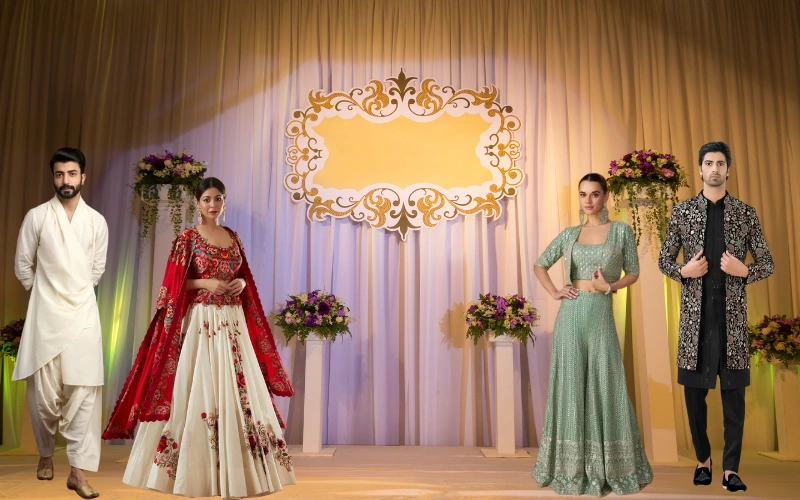
Indo Western Indian wedding guest outfit ideas blend traditional Indian elements like kurtas, lehengas, and ethnic embroidery with Western silhouettes such as blazers, jumpsuits, and contemporary cuts—creating sophisticated fusion looks perfect for modern celebrations.
Table of Contents
ToggleThe Indo Western Wedding Fashion Landscape: By The Numbers
Here’s what the current wedding fashion scene looks like in India:
| Fashion Metric | Statistics (2024-2025) |
|---|---|
| Indo Western outfit searches during wedding season | 340% increase (Oct-Feb) |
| Average spending on Indo Western wedding attire | ₹8,000 – ₹25,000 |
| Percentage of millennials choosing fusion wear | 67% |
| Top preference age group | 25-40 years |
| Most popular color choices | Pastels (42%), Jewel tones (31%), Neutrals (27%) |
| Rental vs. Purchase ratio | 35% rent, 65% purchase |
| Online shopping growth for Indo Western wear | 58% year-over-year |
These numbers tell us something fascinating: wedding fashion in India isn’t just evolving—it’s revolutionizing. The modern Indian wedding guest wants comfort without compromising on tradition, style without the stuffiness, and Instagram-worthy looks that still respect cultural roots.
Why Indo Western Is Taking Over Indian Wedding Fashion
I’ll never forget the moment I realized Indo Western Indian wedding guest outfit ideas had officially become mainstream. It was at my cousin Rahul’s wedding in Jaipur last December. The venue looked like a fashion runway—guests in embroidered blazers paired with dhoti pants, women in cape lehengas with contemporary cuts, and everyone looking effortlessly chic. Gone were the days when you’d spot the same bandhgala suits and traditional sarees on repeat.
The fusion fashion movement isn’t just a trend; it’s a cultural statement. According to leading fashion designer Sabyasachi Mukherjee, “Indo Western wear represents the modern Indian identity—rooted in heritage yet globally contemporary.” And he’s absolutely right. Today’s wedding guests are traveling professionals, global citizens who want their outfits to reflect both their cultural pride and modern sensibilities.
The beauty of Indo Western fashion lies in its versatility. You’re attending a mehendi ceremony in the afternoon and a cocktail party in the evening? Your Indo Western outfit transitions seamlessly. You want to look traditional enough to please the aunties but contemporary enough for your Instagram feed? Fusion wear has you covered. This adaptability, combined with superior comfort compared to heavy traditional attire, explains why 67% of millennials now prefer fusion outfits for wedding functions.
Indo Western Outfit Ideas for Women: Show-Stopping Options
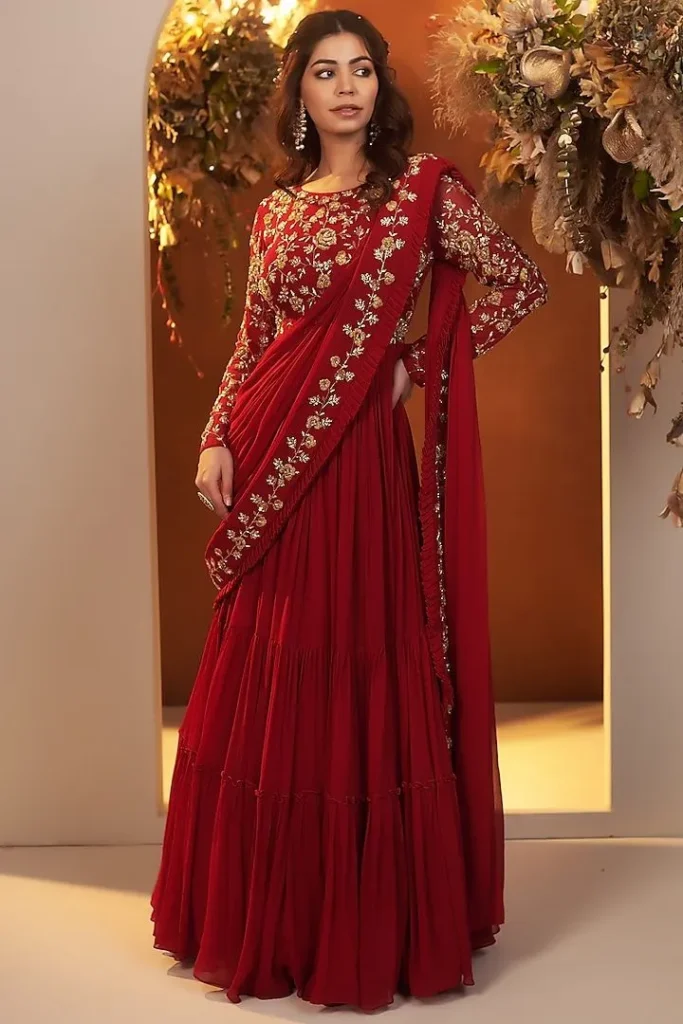
1. The Draped Saree Gown: Elegance Redefined
Picture this: the timeless grace of a saree meets the structured elegance of a gown. The draped saree gown has become the go-to choice for women who want traditional opulence with contemporary ease. Designer Manish Malhotra’s recent collections showcase pre-stitched saree gowns that eliminate the hassle of pleating while maintaining that quintessential Indian silhouette.
What makes this outfit exceptional is its versatility across body types. The flowing drape flatters curvy figures beautifully, while the structured bodice creates definition for slimmer frames. I styled a bride’s sister last month in a blush pink draped saree gown with embellished cold-shoulder details and a side slit—she looked like she stepped off a Cannes red carpet while being perfectly appropriate for the sangeet ceremony.
Styling Tips: Pair with a statement kamarbandh (waist belt), chandelier earrings, and strappy heels. Choose fabrics like georgette, crepe, or silk for the best drape. Opt for pastel shades for daytime functions and jewel tones like emerald or wine for evening events. The price range typically falls between ₹12,000 to ₹45,000 depending on embellishment and designer label.
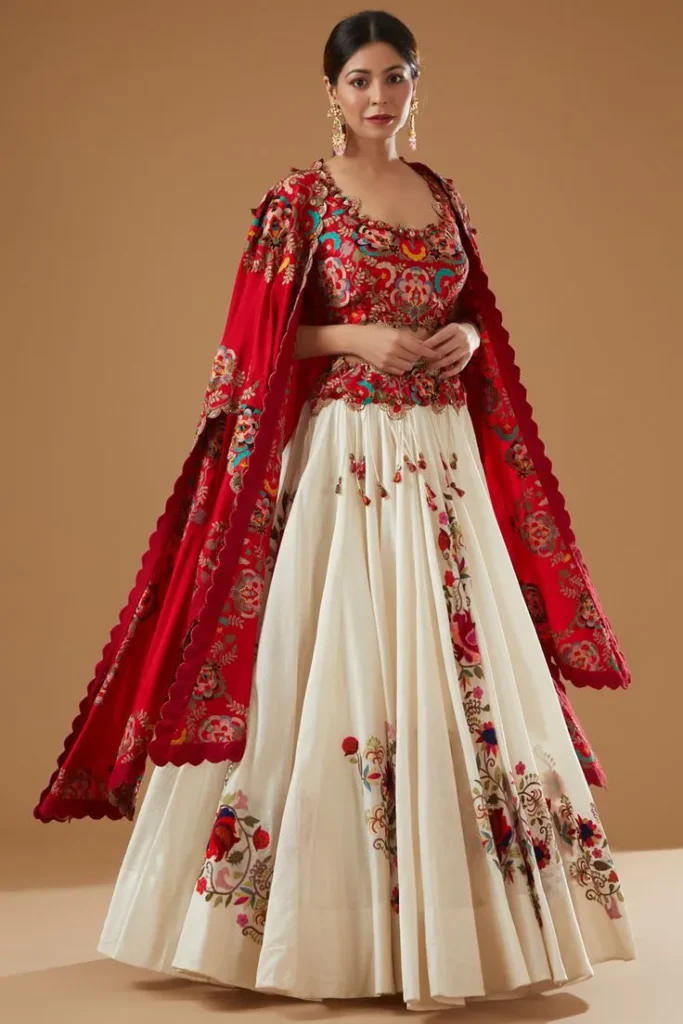
2. The Cape Lehenga: Drama Without The Weight
If Bollywood has taught us anything, it’s that capes equal instant glamour. The cape lehenga combines the traditional lehenga skirt with a contemporary cape top, creating movement and drama without the weight of a traditional dupatta. I’ve watched countless wedding guests struggle with managing dupattas throughout ceremonies—the cape eliminates this hassle entirely while amplifying style quotient tenfold.
Fashion blogger and influencer Komal Pandey, known for her fusion fashion statements, recently shared, “The cape lehenga is my secret weapon for destination weddings. It photographs beautifully, keeps you cool, and you never worry about your dupatta slipping.” She’s absolutely right—this outfit solves multiple problems while looking incredibly chic.
Styling Tips: Balance the drama with minimal jewelry—statement earrings and a cocktail ring are sufficient. Choose embroidered or embellished capes for evening functions and lighter fabrics like organza or net for daytime events. A-line lehenga skirts work best with longer capes, while flared skirts complement shorter, jacket-style capes. Expect to invest ₹15,000 to ₹60,000 for a quality cape lehenga set.
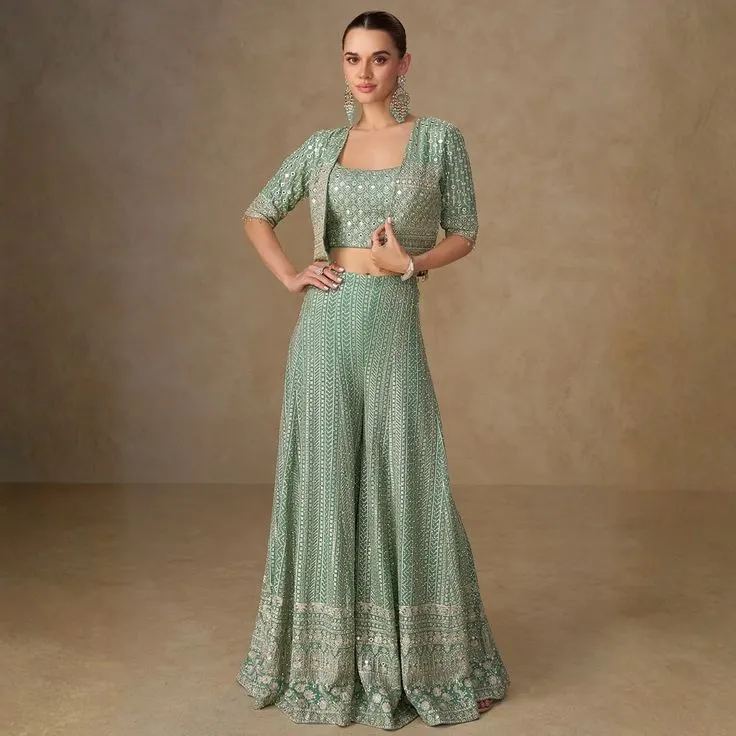
3. The Palazzo Suit with Contemporary Jacket: Modern Meets Traditional
Here’s where Indo Western Indian wedding guest outfit ideas get seriously practical. The palazzo suit with a contemporary jacket offers unmatched comfort while maintaining that wedding-appropriate polish. Replace the traditional dupatta with a structured jacket—embroidered, brocade, or even in contrasting fabric—and you’ve got yourself an outfit that works from mehendi to reception.
During last season’s wedding marathon (yes, Indian wedding season is a marathon, not a sprint), I wore variations of this outfit to six different functions. A ivory palazzo with a navy blue embroidered jacket for a morning ceremony, pastel pink with a sheer cape jacket for an evening sangeet, and a bold printed palazzo with a velvet jacket for a winter wedding. The versatility is unmatched.
Styling Tips: Experiment with jacket lengths—cropped jackets look youthful and fun, while floor-length jackets add drama. Mix textures—pair silk palazzos with velvet jackets or cotton silk with brocade. Accessorize with a potli bag and juttis for traditional touch. This option is budget-friendly too, ranging from ₹6,000 to ₹25,000.
4. The Anarkali Jumpsuit: The Best of Both Worlds
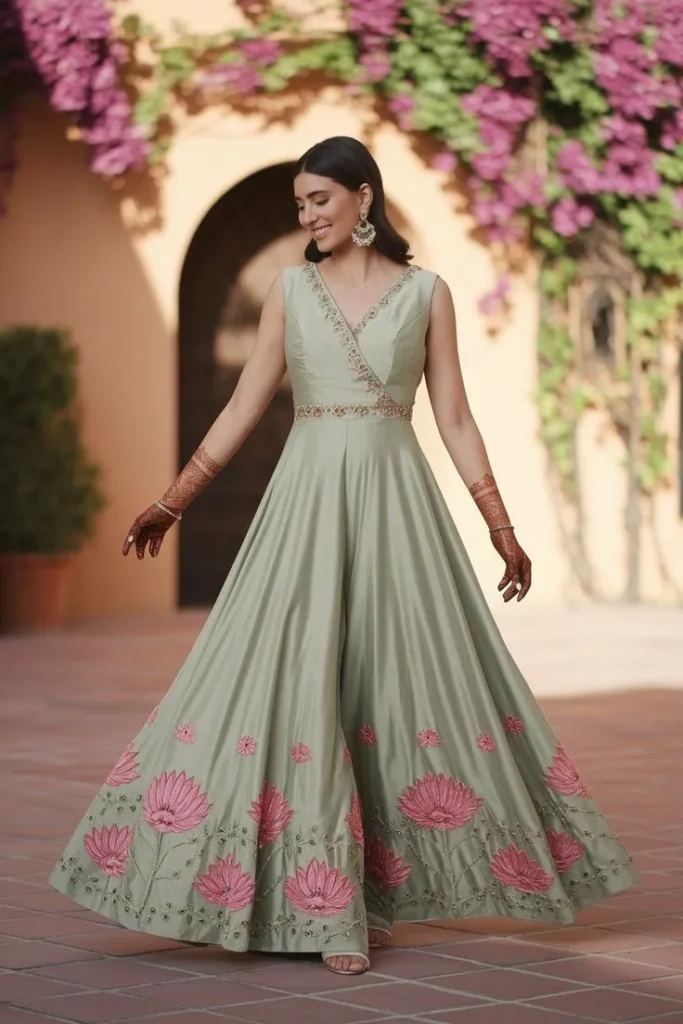
When I first encountered an Anarkali jumpsuit, I thought, “Who’s the genius who thought of this?” Combining the flowy elegance of an Anarkali with the structured comfort of a jumpsuit creates an outfit that’s equal parts practical and stunning. The Anarkali jumpsuit typically features the characteristic flared silhouette on top with fitted pants underneath, offering the visual impact of traditional wear with modern functionality.
Celebrity stylist Anaita Shroff Adajania has dressed multiple Bollywood actresses in Anarkali jumpsuits for wedding appearances, noting, “It’s perfect for clients who want to dance without restrictions but still look traditionally appropriate.” And dancing without restriction is exactly what you want at an Indian wedding.
Styling Tips: Choose empire waist designs for a flattering fit. The flare should start just below the bust for best proportions. Pair with jhumkas or chandbalis and a maang tikka for traditional functions. Avoid heavy jewelry—let the outfit be the statement. Quality Anarkali jumpsuits range from ₹8,000 to ₹35,000.
Indo Western Outfit Ideas for Men: Dapper Choices
1. The Bandhgala Suit with Contemporary Twist: Regal Refinement
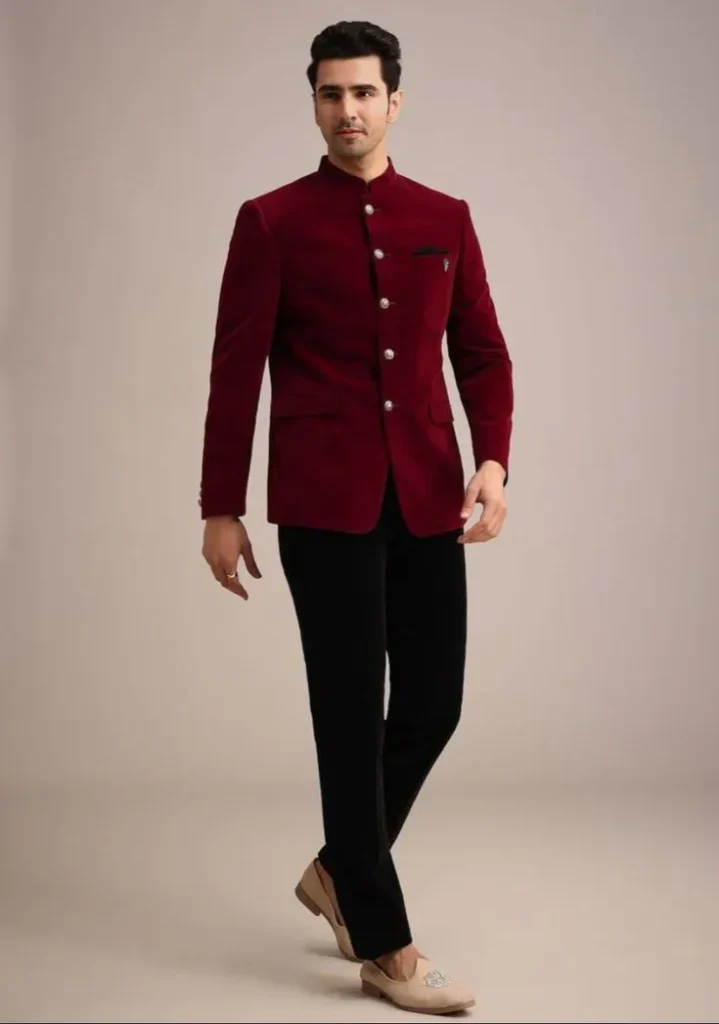
The bandhgala has been the cornerstone of Indian men’s formal wear for decades, but the contemporary version takes it up several notches. We’re talking slim-fit silhouettes, unconventional fabrics like linen blends and textured cotton, and modern color palettes beyond the standard navy and black. Celebrity designer Raghavendra Rathore has revolutionized the bandhgala by introducing structured shoulders, tapered waists, and experimental closures.
I recently styled a groom’s brother in a charcoal grey bandhgala with subtle geometric embroidery and mandarin collar—paired with black trousers and leather brogues. The look was sharp, contemporary, and respectful of tradition. He received more compliments than the groom (don’t tell anyone).
Styling Tips: The fit is everything—invest in tailoring if needed. Pair with trousers in contrasting or complementary shades rather than matching fabric. Pocket squares add personality—try patterns or textures. Oxfords or brogues work better than traditional mojaris for the contemporary look. Budget ₹10,000 to ₹50,000 for quality bandhgalas.
2. The Kurta with Nehru Jacket and Jeans: Casual Elegance
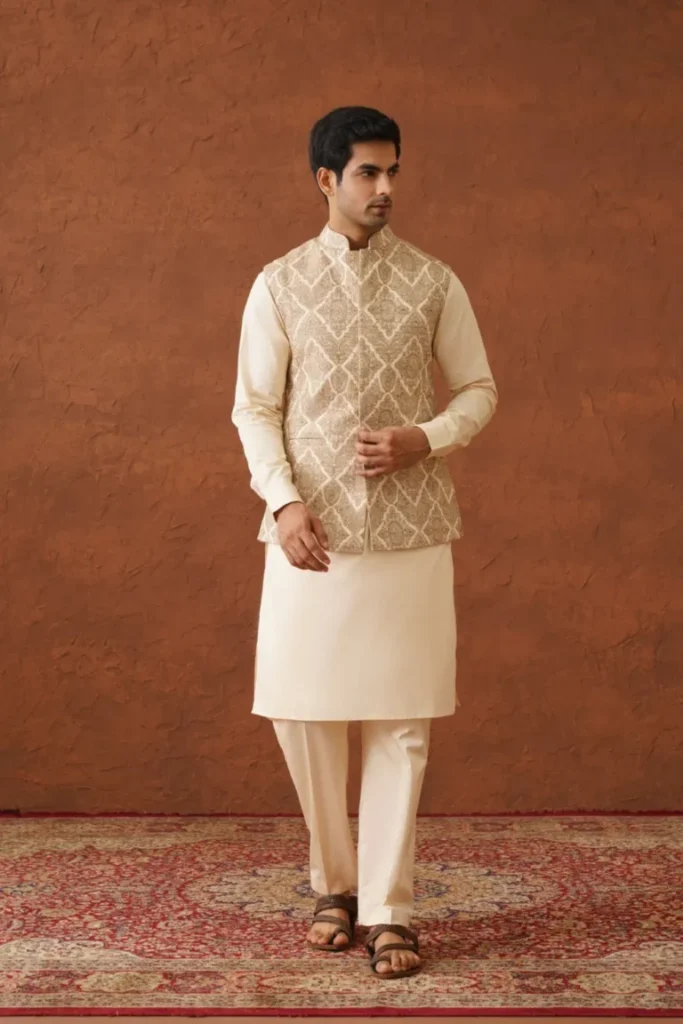
For daytime functions like mehendi or haldi, the kurta-Nehru jacket-jeans combination hits the perfect balance between relaxed and refined. This Indo Western Indian wedding guest outfit idea works particularly well for younger guests or semi-formal functions. The key is choosing the right elements—a well-fitted kurta in breathable fabric, a structured Nehru jacket (not oversized), and dark, well-fitted jeans.
Fashion consultant and stylist Nikhil Thampi advocates for this combination especially for destination weddings: “It’s comfortable for travel, appropriate for daytime ceremonies, and can be styled up or down depending on accessories.” I’ve worn this to poolside mehendis and garden ceremonies countless times—it never fails.
Styling Tips: Keep the kurta length mid-thigh or slightly shorter for balance with jeans. Choose jackets in contrast colors or textures—a beige kurta with brown jacket, or white kurta with navy jacket. Brown leather shoes or kolhapuris complete the look. Avoid sneakers unless it’s explicitly a casual function. This option is wonderfully affordable, ranging from ₹4,000 to ₹18,000.
3. The Asymmetrical Kurta Set: Modern Edge
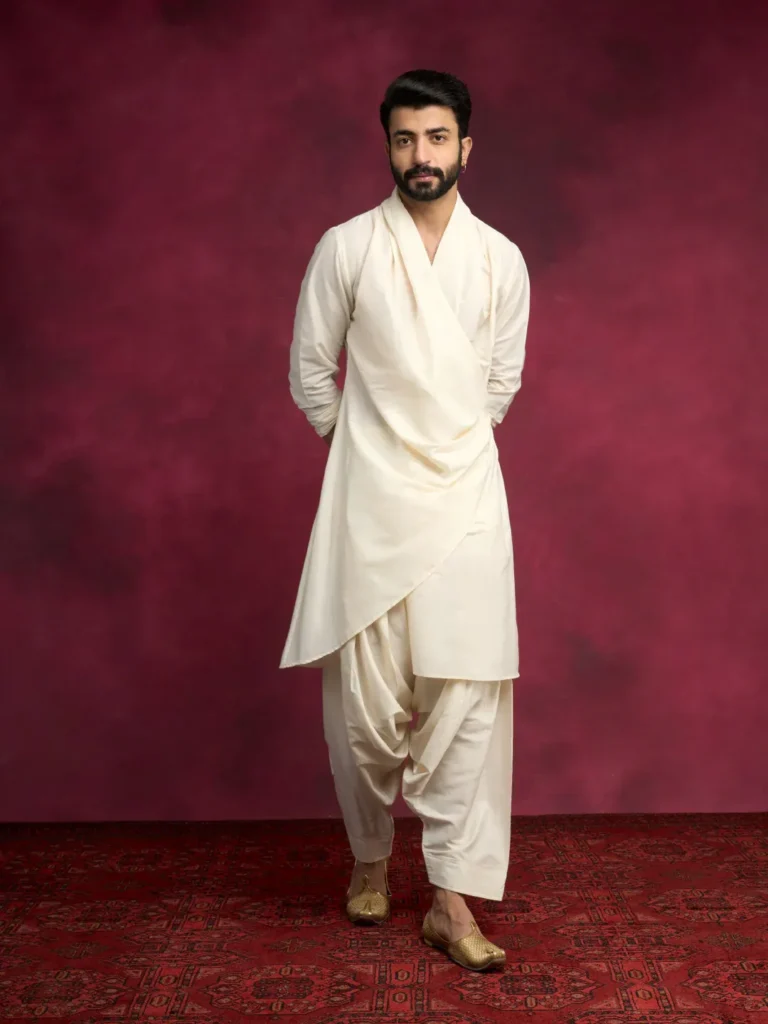
Asymmetry is the fashion world’s favorite word right now, and it’s made its way beautifully into Indian menswear. Asymmetrical kurtas feature uneven hemlines—shorter on one side, longer on the other—creating visual interest and contemporary appeal. Paired with churidar or straight-cut trousers, this look screams modern sophistication.
What I love about this option is how it photographs. The asymmetry creates dynamic lines in pictures, making you look effortlessly stylish. Fashion designer Kunal Rawal, known for his contemporary menswear, has created stunning asymmetrical pieces for celebrities attending weddings, proving that traditional silhouettes can indeed be reinvented.
Styling Tips: Balance is crucial—if your kurta is heavily embellished, keep the bottom simple. Asymmetry works best in solid colors or subtle prints. Pair with mojaris or leather juttis to maintain the fusion aesthetic. A watch or bracelet adds just enough accessory without overdoing it. Price range: ₹6,000 to ₹30,000.
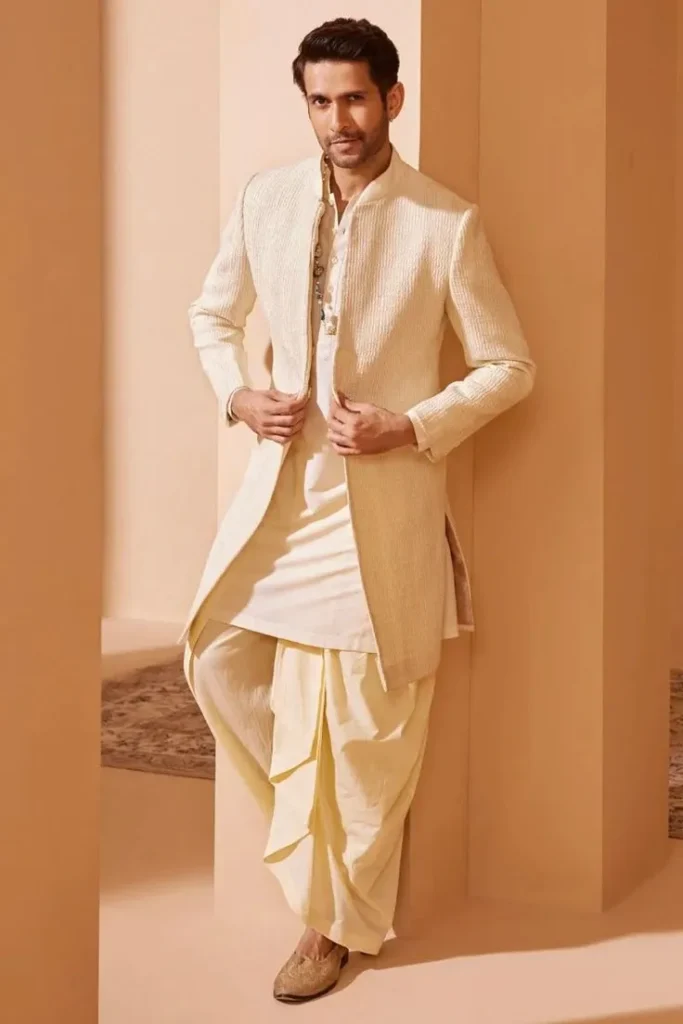
4. The Dhoti Pant with Shirt and Jacket: Heritage Reimagined
The dhoti pant—structured trousers designed to mimic the drape of a traditional dhoti—paired with a crisp shirt and blazer represents the pinnacle of Indo Western fusion for men. This combination takes one of India’s most ancient garment styles and translates it into contemporary formal wear that works in any setting.
I’ll be honest—when dhoti pants first emerged, I was skeptical. Would they look too costumey? The answer is a resounding no when done right. I’ve styled numerous clients in dhoti pants for cocktail parties and reception ceremonies, and the response has been overwhelmingly positive. The key lies in keeping the rest of the outfit structured and minimal.
Styling Tips: Choose dhoti pants in neutral colors like grey, beige, or black for versatility. Pair with solid-colored fitted shirts—white is always safe but don’t shy away from pastels. The blazer should be tailored and in a complementary shade. Formal shoes—oxfords or monks—complete the look. Expect to spend ₹8,000 to ₹35,000 for this ensemble.
Fabric Choices That Make or Break Your Look
Let’s talk about something crucial that many people overlook: fabric selection. The difference between looking polished and looking disheveled often comes down to choosing the right textile. Indian weddings typically span multiple days and various weather conditions, making fabric choice even more critical.
For women, silk and silk blends offer timeless elegance and photograph beautifully but can be heavy for extended wear. Georgette and chiffon provide flow and movement, ideal for dancing, while being lighter and more breathable. Velvet creates luxury and richness, perfect for winter weddings and evening functions. Cotton silk blends offer comfort without sacrificing style—my personal favorite for daytime events. According to textile expert Dr. Darlie Koshy from National Institute of Fashion Technology, “The Indian wedding guest should prioritize breathability and drape over heavy embellishment, especially for functions lasting several hours.”
For men, the fabric conversation is equally important. Linen and linen blends work wonderfully for daytime and destination weddings, offering breathability and a relaxed elegance. Cotton silk provides structure with comfort—ideal for kurtas and bandhgalas. Wool blends create sharp, formal looks perfect for evening receptions, particularly in winter months. Avoid synthetic fabrics that don’t breathe—you’ll regret it during three-hour ceremonies.
Color Psychology for Wedding Guests
Choosing the right color isn’t just about looking good; it’s about reading the room and respecting certain unwritten rules. Traditional wisdom says avoid red (reserved for brides), white (associated with mourning in some communities), and black (considered inauspicious by some). But modern weddings are changing these rules.
Pastels have emerged as the undisputed champions of wedding guest fashion—blush pink, mint green, powder blue, and lavender create sophisticated, photograph-friendly looks. Jewel tones like emerald, sapphire, and ruby work beautifully for evening functions, adding richness without overshadowing the couple. Metallics—gold, silver, and bronze—have become increasingly popular, offering glamour that’s festive without being overwhelming.
Fashion psychologist Dr. Dawnn Karen explains, “Color choice at weddings communicates respect for tradition while expressing personal style. Pastels signal elegance and restraint, jewel tones convey celebration and joy, while metallics represent festivity and occasion-appropriateness.”
The Accessory Game: Making Your Outfit Pop
Here’s a secret: Indo Western Indian wedding guest outfit ideas reach their full potential only when accessorized correctly. I’ve seen stunning outfits fall flat due to poor accessory choices, and simple outfits elevated to extraordinary through thoughtful styling.
For women, the jewelry strategy should follow the “statement or set” rule—either one statement piece (like a dramatic choker or chandelier earrings) or a coordinated set (necklace, earrings, and maang tikka). Mixing multiple statement pieces creates chaos rather than cohesion. Footwear deserves serious attention—embellished juttis or kolhapuris for traditional functions, heeled sandals or pumps for contemporary looks. The potli bag or clutch completes the ensemble—choose one that complements but doesn’t exactly match your outfit.
For men, accessories are subtler but equally important. A quality watch communicates sophistication—stick with classic designs rather than sporty chronographs. Pocket squares add personality to jackets—experiment with patterns and colors that complement rather than match exactly. Cufflinks elevate shirts—opt for subtle designs in metal or stone. Footwear makes or breaks the look—invest in quality leather shoes or mojaris rather than buying multiple cheap pairs.
Navigating Regional Variations
India’s diversity means wedding customs and appropriate attire vary significantly across regions. What works for a North Indian Punjabi wedding might feel out of place at a South Indian ceremony. This is where understanding regional sensibilities becomes important.
North Indian weddings generally welcome bold colors, heavy embellishments, and dramatic silhouettes. The functions are typically numerous and grand, requiring multiple outfit changes. South Indian weddings traditionally favor subtlety and elegance—lighter colors, simpler designs, and more conservative cuts work better, though urban South Indian weddings are increasingly embracing fusion fashion. East Indian Bengali weddings appreciate traditional elements mixed with contemporary cuts—women often choose saree gowns or fusion sarees. West Indian Gujarati and Maharashtrian weddings welcome colorful, festive attire with regional touches.
The smart approach? When in doubt, observe what others from the community wear or simply ask the hosts. Modern couples appreciate when guests care enough to understand their cultural context.
Budget-Conscious Indo Western Fashion
Let’s address the elephant in the room—weddings are expensive to attend, especially when you need multiple outfits. But looking fabulous doesn’t require draining your bank account. Strategic shopping and smart styling can help you achieve magazine-worthy looks on reasonable budgets.
Rental services like Flyrobe, Rent It Bae, and Stage3 offer designer Indo Western outfits at 10-15% of retail prices. This is perfect for statement pieces you’ll wear once. Mix-and-match strategy works wonders—invest in high-quality basics (well-fitted pants, skirts, simple kurtas) and rotate statement pieces (jackets, capes, dupattas). A ₹3,000 palazzo paired with different jackets creates multiple looks. Accessory rotation creates outfit variation without additional outfit purchases. The same kurta-pant set looks completely different with changed jewelry, shoes, and dupattas.
Local boutiques and online marketplaces often offer better value than designer labels—quality craftsmanship at 30-40% lower prices. During my research across Delhi’s Lajpat Nagar, Mumbai’s Linking Road, and Bangalore’s Commercial Street, I found stunning Indo Western pieces ranging from ₹2,500 to ₹12,000 that rivaled designer collections in quality and style.
Seasonal Considerations
Indian wedding season runs primarily from October through February, but weddings happen year-round. Seasonal adaptation ensures comfort without compromising style.
Winter weddings (December-February): Embrace layers—velvet jackets, brocade capes, and silk fabrics provide warmth and luxury. Deeper colors like wine, forest green, and navy work beautifully. Closed-toe shoes become practical and stylish. Shawls or stoles can be incorporated elegantly.
Summer weddings (March-June): Prioritize breathability—cotton silk, georgette, and chiffon keep you cool. Lighter colors reflect heat—pastels, whites (if culturally appropriate), and soft tones. Open-toe footwear provides relief. Minimal jewelry prevents discomfort.
Monsoon weddings (July-September): Choose outfits that can handle unexpected weather—shorter hemlines prevent dragging in puddles. Avoid suede or delicate fabrics that water damages. Waterproof footwear hidden under palazzo pants or dhotis works cleverly.
The Fit Factor: Why Tailoring Matters
I cannot emphasize this enough: the difference between looking good and looking exceptional is almost always about fit. An average outfit tailored to perfection beats an expensive designer piece that doesn’t fit properly. Indian body types vary significantly, and off-the-rack pieces rarely fit perfectly without alterations.
For women, common tailoring needs include sleeve adjustments, bodice fitting, length modifications, and shoulder structuring. A well-fitted blouse transforms a lehenga or saree entirely. Palazzo pants should fit snugly at the waist without gaping, with comfortable hip room. Kurtas should skim the body without being tight—neither tent-like nor body-con.
For men, tailoring becomes even more critical. Bandhgalas and jackets require precise shoulder fit—too tight restricts movement, too loose looks sloppy. Sleeve length should allow about half an inch of shirt cuff to show. Kurtas need appropriate length and width—mid-thigh length generally flatters most body types. Trouser breaks (where pants meet shoes) should be minimal and clean.
Budget ₹500-₹2,000 for basic alterations—it’s the best investment you’ll make in your wedding guest wardrobe.
Common Mistakes to Avoid
Through years of styling wedding guests, I’ve noticed recurring mistakes that are easily avoidable. Over-accessorizing tops the list—more is definitely not more when it comes to jewelry and embellishments. Ignoring the dress code mentioned in invitations causes awkward situations—if it says cocktail attire, don’t show up in heavily traditional wear. Wrong footwear ruins outfits and comfort—four-inch heels for an outdoor lawn wedding equals disaster.
Timing wardrobe decisions incorrectly creates unnecessary stress—don’t wait until three days before the wedding to shop. Outfit planning should begin at least two weeks in advance. Forgetting about outfit trials means discovering fit issues too late—always try complete outfits with accessories and footwear before the event. Neglecting weather considerations leads to discomfort—check forecasts and plan accordingly.
Ignoring body type and personal style in favor of trends results in looking costume-y rather than stylish. Just because crop-top lehengas are trending doesn’t mean they suit everyone’s comfort level or body type. Own your style.
Conclusion
Indo Western Indian wedding guest outfit ideas represent the beautiful evolution of Indian fashion—honoring our rich heritage while embracing contemporary global aesthetics. Whether you choose a draped saree gown, cape lehenga, bandhgala suit, or dhoti pants with blazer, the key lies in selecting pieces that make you feel confident, comfortable, and appropriately festive.
The fusion fashion movement isn’t just about mixing East and West—it’s about creating your personal style statement while respecting cultural contexts. It’s about being comfortable enough to dance at the sangeet without worrying about your dupatta, looking polished enough for family photos, and feeling like your best self throughout marathon wedding celebrations.
Remember, the best wedding guest outfit isn’t necessarily the most expensive or heavily embellished—it’s the one that fits your body, suits the occasion, respects the hosts’ cultural background, and makes you feel absolutely fabulous. After all, weddings are celebrations of love and joy. Your outfit should help you participate fully in that celebration rather than constantly adjusting, worrying, or feeling uncomfortable.
So go ahead—experiment with that cape lehenga, try the asymmetrical kurta, invest in tailoring, and most importantly, wear your fusion outfit with confidence. Because confidence, my friends, is the ultimate accessory that never goes out of style.
Frequently Asked Questions
Q1: Can men wear jeans to Indian weddings?
Yes, men can wear jeans to Indian weddings for daytime functions like mehendi or haldi. Choose dark, well-fitted jeans paired with kurtas or Nehru jackets. Avoid distressed styles. For evening or formal ceremonies, traditional trousers or churidars are safer and more appropriate.
Q2: How many outfit changes should a wedding guest plan for?
For multi-day Indian weddings, plan 2–4 outfits depending on events. Usually one each for mehendi/haldi, sangeet, wedding ceremony, and reception. Repeating outfits across different weddings is fine, but avoid repeating within the same wedding functions.
Q3: Is it appropriate to wear black to Indian weddings?
Black is increasingly acceptable, especially for evening events in urban settings. However, some families still avoid it. If unsure, check with the hosts or choose black outfits with bright embroidery, metallic accents, or colorful accessories to keep the look festive.
Q4: What’s the difference between Indo Western and fusion wear?
Indo Western wear blends Indian and Western elements specifically, while fusion wear can mix styles from any cultures. In practice, both describe modern outfits combining traditional Indian garments with contemporary silhouettes, such as saree gowns, kurta-jean pairings, or dhoti pants with blazers.
Q5: How far in advance should I shop for wedding guest outfits?
Start shopping 3–4 weeks in advance to allow time for trials and alterations. For custom or designer outfits, allow 6–8 weeks. If renting, book at least 2 weeks early, especially during peak wedding season, to secure preferred styles.
Q6: Can women wear pants to traditional Indian weddings?
Yes, women can wear pants like palazzos, dhoti pants, or cigarette pants with ethnic tops. Balance modern bottoms with traditional, embellished kurtas or jackets. For conservative ceremonies, opt for flowing styles and modest silhouettes to maintain a traditional, elegant look.
Disclaimer: The outfit ideas, styling suggestions, and price ranges reflect fashion trends and market insights from early 2025. Trends and availability may vary by season, location, and retailer. Personal body type, comfort, cultural context, and individual preferences should guide final choices. Always respect the wedding family’s traditions and dress codes. The author and platform are not responsible for styling outcomes. When uncertain, it’s best to confirm appropriate attire directly with the hosts.
Read more
10 Stunning Anarkali Suit Design Ideas for Timeless Elegance
